· Rajat Pandit · Strategy · 10 min read
Distillation in 2026: The Hidden Arms Race
All frontier labs have converged on distillation as their primary post-training method. The real innovation is no longer in pre-training but in post-training pipeline design. Here is why distillation will define competitive advantage in the next AI cycle.
The most important infrastructure development in AI this year is not happening in a press release. It is happening in the post-training pipelines of every major model lab, and almost nobody in the industry is talking about it because they do not even realize it is happening.
Every frontier model that reached the public this year, Claude, GPT-5, Gemini, Qwen, went through distillation. Not as an optional optimization step. As the primary paradigm for making their models production-ready, cost-effective, and deployable at scale. The pre-training work gets all the attention. The distillation work determines what actually ships to customers.
This is a structural shift in how the AI industry creates value. The real leverage is moving from the trillion-dollar pre-training run that everyone talks about to the post-training pipeline design that determines which models you can actually afford to serve. Organizations that understand distillation as a strategic capability, not just an engineering step, will have a competitive advantage that is difficult to recover from.
Let me explain why this shift matters, what it means for the industry, and who benefits.
- All frontier labs have converged on distillation as the primary post-training paradigm, not an optional optimization step.
- Distilled 14B models can match 70B model quality on many tasks while reducing inference cost by five to one or more.
- The distillation pipeline is the invisible infrastructure that makes frontier model deployment economically viable at production scale.
- Organization-level AI procurement strategies must account for distillation-driven cost shifts, not just pre-training capability comparisons.
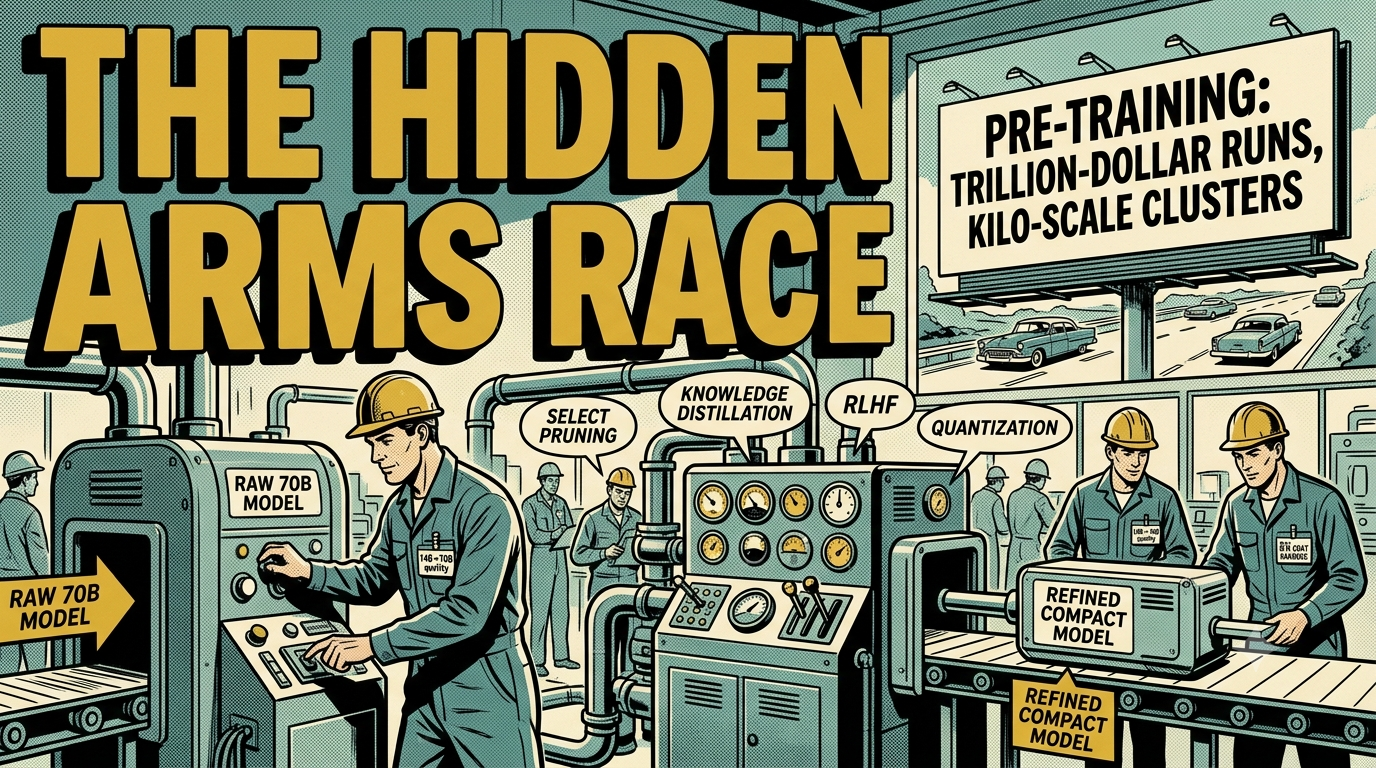
Pre-Training Is the Billboard. Distillation Is the Product.
A frontier model pre-training run costs hundreds of millions of dollars. It requires thousands of custom chips, months of compute time, and a team of hundreds of researchers. When OpenAI or Google or Anthropic announces a new pre-training run, the headlines are massive. The industry analyzes every detail about the architecture, the dataset composition, the compute budget.
But the pre-trained model that comes out of that run is not the model that ships. It is a raw, expensive, inefficient base that needs to be shaped, constrained, optimized, and distilled into something usable. The distillation process takes that raw model and transforms it into a smaller, faster, cheaper-to-run version that retains the essential capabilities while shedding the overhead that makes the base model economically unviable for production use.
This is not a marginal step. This is the step that determines the economics of every model deployed in production.
The distillation pipeline involves techniques like selective parameter pruning (removing unused or underutilized model capacity), knowledge distillation (training a smaller model to replicate the output behavior of a larger model), reinforcement learning from human feedback (constraining model behavior to align with desired outputs), and quantization (reducing model precision from FP32 to FP8 or INT8 to dramatically lower memory and compute requirements). Each of these techniques is a research area in its own right, and the combination of all of them applied to the same model creates a post-training pipeline that is more sophisticated than the average machine learning research program.
The labs that build the best distillation pipelines get frontier model performance at a fraction of the inference cost. That is not an engineering detail. That is a strategic advantage that directly determines profit margins on deployed models.
The Convergence Signal
What makes this year particularly significant is the convergence. All frontier labs, across every competitive positioning, have arrived at the same conclusion: distillation is the primary post-training paradigm.
Claude uses distillation to create cost-effective variant models. GPT-5 uses selective distillation to reduce inference cost for production deployments. Gemini uses knowledge distillation to produce smaller specialized models for specific task categories. Qwen uses quantization and pruning to maintain open-weight competitiveness. The techniques differ in detail, but the strategic conclusion is identical.
When every competitor in an industry converges on a specific technological approach, that convergence is a signal about the underlying economics. Distillation has become economically inevitable. The question is no longer whether to distill, but how well you distill compared to your competitors.
This convergence pattern is familiar in other industries. In semiconductor manufacturing, every major chip maker converged on finFET architecture because the physics demanded it. In social media, every platform converged on the infinite scroll because the engagement data demanded it. The distillation convergence across AI labs signals that the economics of model deployment demand it.
The Unit Economics That Distillation Changes
Here is the specific economic shift that distillation enables, because the numbers tell the actual story.
A 70-billion parameter model running at full FP32 precision requires roughly 140 gigabytes of memory just for the model weights. That requires multiple high-end GPUs just to serve one request. At production scale, serving thousands of concurrent users requires a massive GPU cluster, and the cost per inference is substantial.
A distilled 14-billion parameter model running at FP8 precision requires roughly 28 gigabytes. That can fit on a single GPU. The same quality of reasoning on many task categories, but the inference cost is roughly one-fifth of the base model.
For a company serving millions of users, that five-to-one reduction in inference cost compounds into billions of dollars of annual infrastructure savings. Over multiple model generations, the savings are not incremental. They are existential.
The companies that master distillation get to serve more users at lower cost, which means more revenue, which means more compute investment for the next training run, which means a virtuous cycle that competitors cannot break through by just throwing more pre-training money at a raw model.
This is not hype. These are the unit economics that are already running in production at the major labs. The distillation pipeline is the invisible infrastructure that makes frontier model economics viable at scale.
Why This Matters to Every Organization Deploying AI
The distillation convergence creates strategic implications that extend far beyond model labs. Every organization that deploys AI models in production needs to understand this shift, because distillation changes the economics of model procurement and deployment in ways that affect every decision.
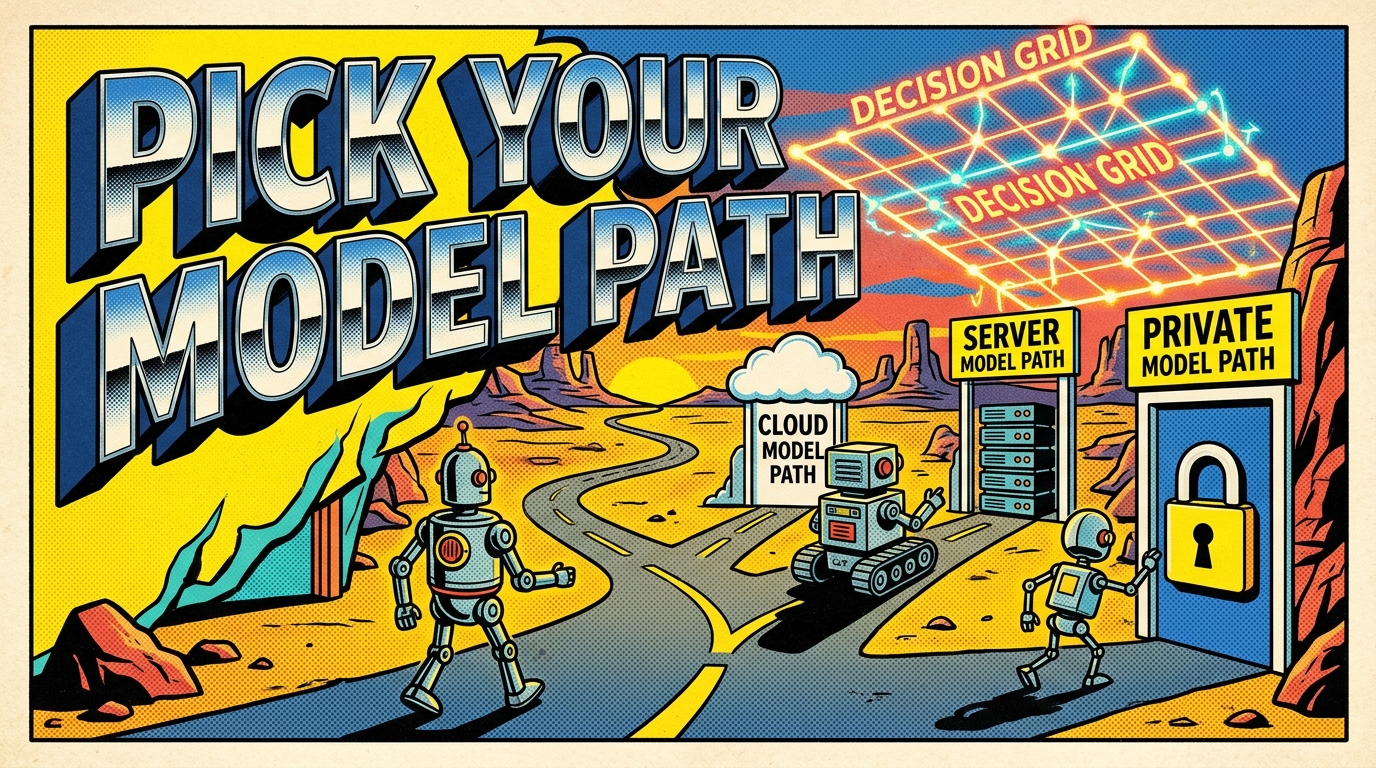
The cost advantage of distilled models means that running a locally hosted distilled model on your own infrastructure can be cheaper than paying per-token for a frontier API. The quality gap between a well-distilled 14B model and a 70B frontier model is smaller than most procurement teams expect. At the same time, the inference cost is often one-third to one-fifth of the API price. This shifts the economic calculation from “which API gives us the best quality” to “which deployment strategy gives us the best quality-cost ratio.”
The availability of distilled models means that the assumption that frontier model quality requires frontier model pricing is false. A well-distilled open model can be downloaded, self-hosted, and run on commodity GPU infrastructure. The total cost of ownership is dominated by hardware and electricity, not per-token API fees. Organizations with GPU infrastructure already can get significant cost reduction by switching from API-based inference to self-hosted distilled models.
The pace of distillation improvement means that the models available today will not represent the quality-cost frontier for long. A model that is expensive and mediocre today might be distilled into something that is cheap and competitive in six months. Procurement decisions made today need to account for the likelihood that the economic landscape will shift significantly faster than traditional enterprise procurement timelines expect.
The Strategic Moats That Distillation Creates
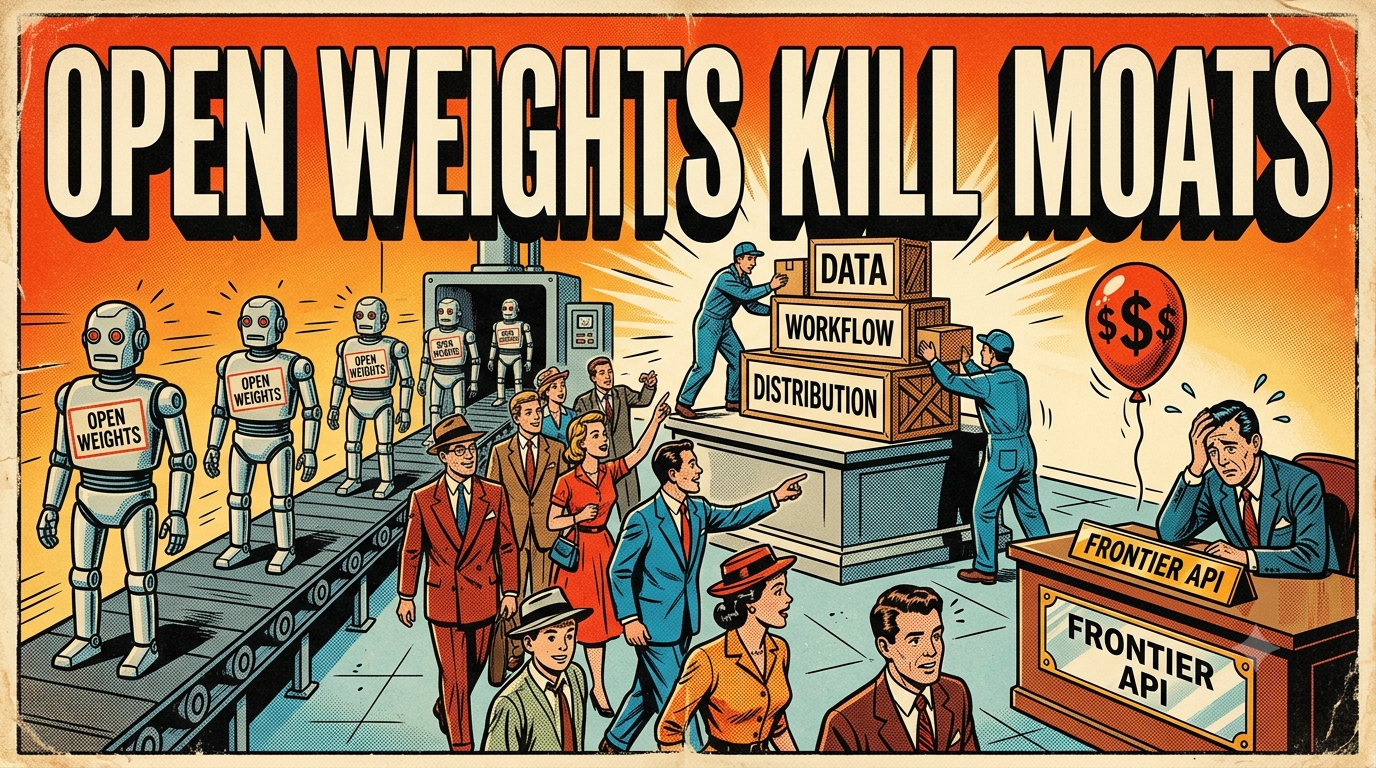
Distillation creates competitive advantages that are difficult for competitors to replicate, and these moats are accumulating in ways most organizations do not track.
First-party data advantage. The best distillation requires high-quality data for training the distilled student models. Labs with large proprietary datasets of real user interactions, real task outcomes, and real behavior patterns can distill more effectively than labs that rely on synthetic or curated datasets. This data advantage compounds over time, because more users generate more interaction data, which produces better distillation, which attracts more users.
Pipeline expertise advantage. Building a production-grade distillation pipeline is an engineering discipline with its own knowledge base, best practices, and institutional expertise. The teams that have mastered the intersection of selective pruning, knowledge distillation, reinforcement learning, and quantization have accumulated tacit knowledge about what works and what does not that cannot be replicated from reading papers or hiring engineers from other organizations. They have built a knowledge-based moat around the distillation process itself.
Iteration speed advantage. Organizations with mature distillation pipelines can iterate faster, running distillation experiments on every new pre-training run and quickly identifying the optimal post-training configuration for each use case. This iteration speed creates a continuous improvement loop that competitors without the infrastructure cannot match. Every new model release is better and more cost-effective than the last, and the gap widens with each iteration.
These moats are not visible in benchmark leaderboards or press releases. They are visible in the margin profiles of deployed model services and the unit economics that determine which organizations can profitably scale AI products.
The Organizational Capability Gap
Here is the hidden risk that most organizations do not recognize: distillation capability requires a completely different skillset from traditional MLOps. It requires expertise in model compression, knowledge distillation theory, quantization optimization, and evaluation methodology that measures quality retention across parameter reduction.
Most ML platform teams are equipped for model serving and monitoring, not model distillation. The engineers who can design and optimize distillation pipelines are rare, expensive, and highly sought after. This creates a capability gap that determines which organizations can benefit from distillation and which cannot, regardless of their access to pre-trained models.
The organizations that address this gap proactively by investing in distillation expertise, building the pipeline infrastructure, and developing the evaluation frameworks will have access to frontier-quality models at a fraction of the infrastructure cost. The organizations that treat distillation as a lab-level concern will continue paying premium API prices for base models or deploying raw models that are too expensive to serve at scale.
This capability gap will widen through 2026 and beyond. The labs that combine strong pre-training with strong distillation will dominate the market. The organizations that understand and invest in distillation as a strategic capability will outperform competitors who only optimize for pre-training quality.
The Forward Trajectory
The distillation wave is just beginning. As models get larger, the cost of serving them at production scale becomes unsustainable without aggressive post-training optimization. The trajectory is clear: distillation will continue to improve, distilled models will continue to close the quality gap with larger models, and the cost advantage of distilled models will continue to widen.
This is not a problem with an engineering solution. It is an industry-wide shift in how AI value is created and captured, from the pre-training phase to the post-training phase. The pre-training work builds the potential. The distillation work unlocks the economics.
Organizations that understand this shift and invest in distillation capability will have access to AI infrastructure that is cheaper, faster, and more competitive than what competitors relying solely on pre-training quality can achieve. The war is not being won in the pre-training runs. It is being decided in the distillation pipelines.
The question for every AI-leadership team is whether they are building the distillation capability that determines their long-term cost structure or waiting for the infrastructure cost curve to solve itself. The curve does not solve itself. It is shaped by the quality of distillation pipelines, and that quality is determined by organizational investment and expertise.
That investment decision is the strategic infrastructure choice of 2026.