· Rajat Pandit · Agentic AI · 10 min read
Codebase-Aware Agentic AI: Why MCP + Persistent Indexing Is the Next Layer
code-review-graph at 20K stars. AI coding agents are moving past generic code search. The next layer is persistent structural indexing through MCP — how agents go from helpful junior to autonomous contributor.
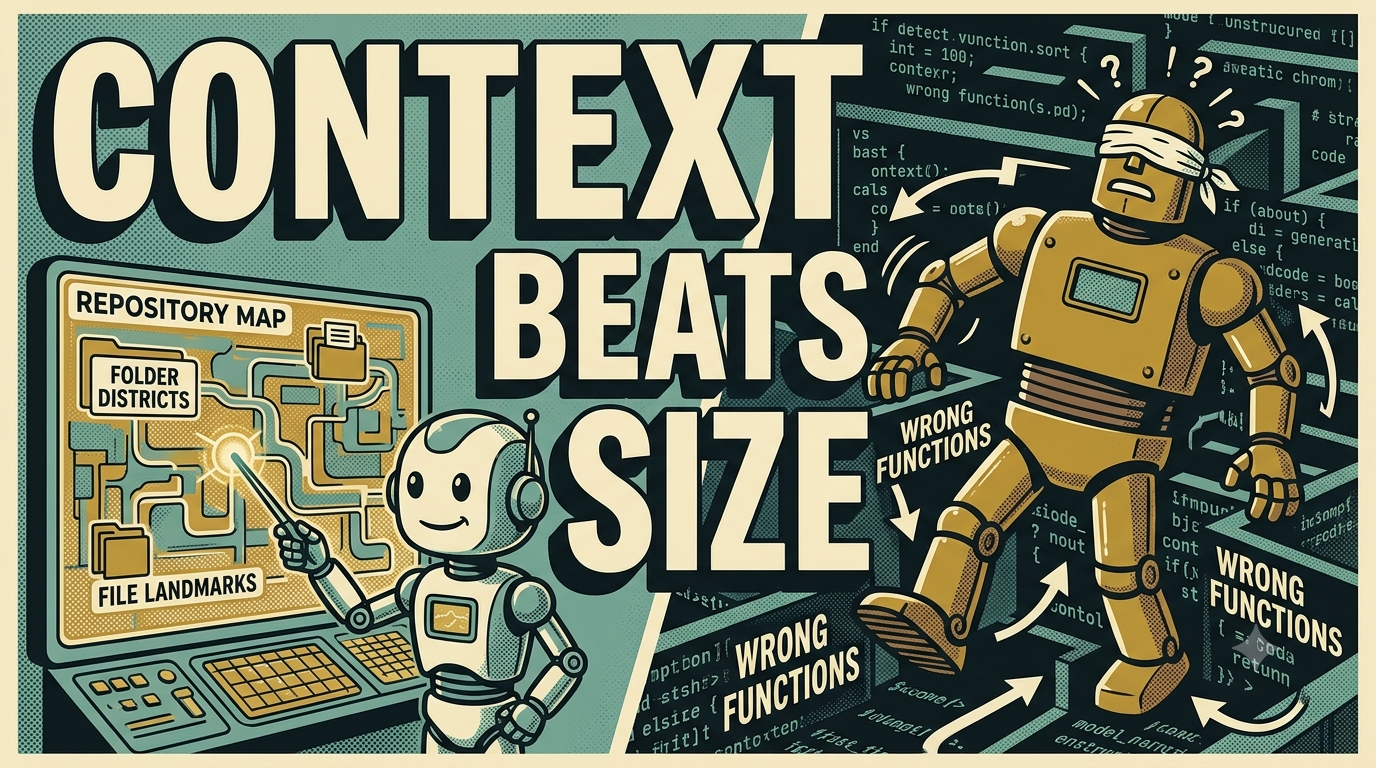
The AI coding tools available today are helpful juniors. They read context when you give it to them. They answer questions about the files you open. They suggest code based on what is in the current tab. But they do not know your codebase. They do not understand the structure, the dependencies, the architecture decisions baked into your directory layout. They treat every file as an isolated document.
That pattern is shifting right now. The GitHub trending lists this week show code-review-graph at 20 thousand stars and climbing at 355 new stars per day. Another project, wigolo, shows 1.3 thousand stars and 203 per day. Both address the same underlying problem: AI coding agents need codebase-aware context, not generic code search.
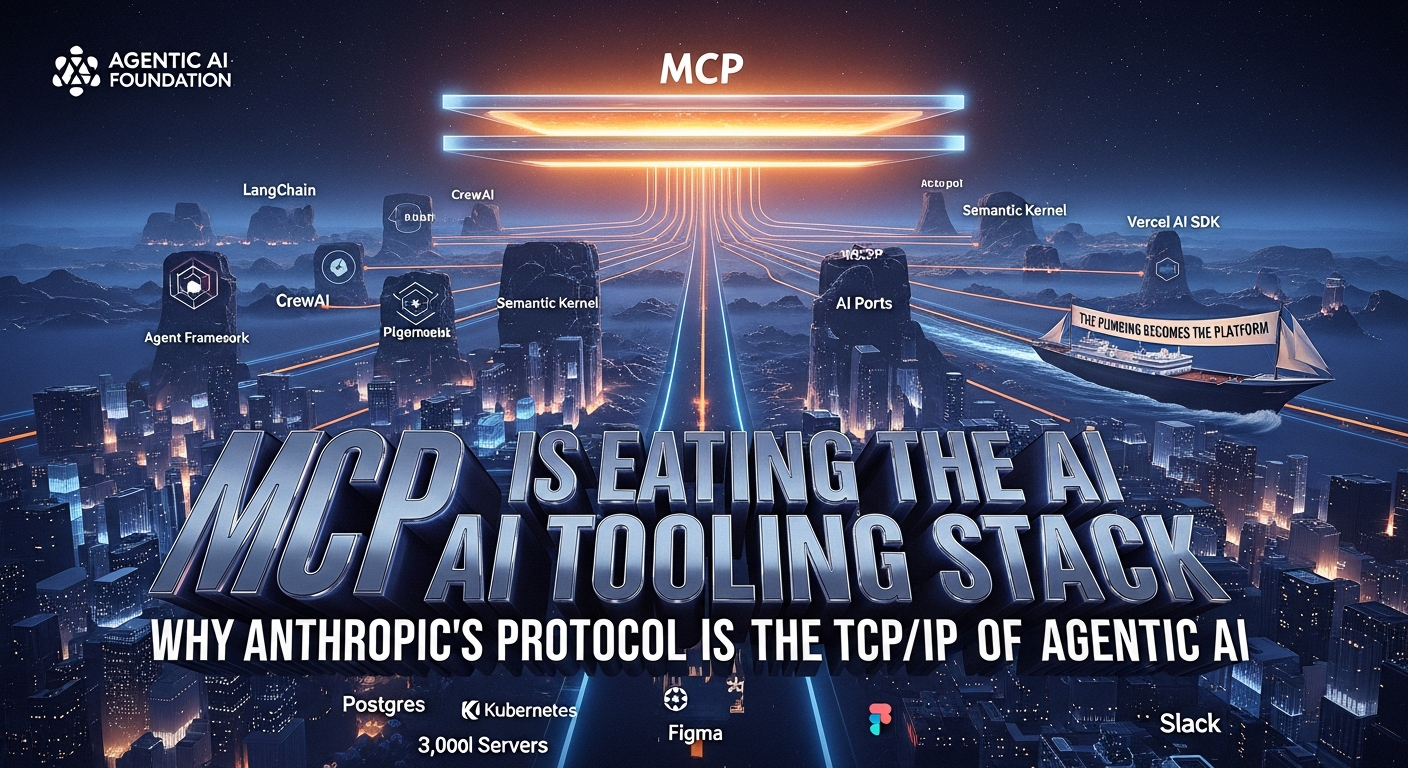
The Model Context Protocol was supposed to standardize how agents talk to tools. It has not gone in that direction. It is evolving into a standard for how agents understand the structural fabric of a codebase. This shift from API tools to persistent code graphs is not incremental. It is a fundamental change in how agents approach engineering work.
Let me explain why this matters and what it means for the way coding agents operate.
- Current AI coding tools are smart juniors with no knowledge of your codebase structure. They process what you give them but miss everything you have not described.
- Persistent codebase graphs index files, functions, and imports as a connected structure, enabling architectural queries that keyword search cannot answer.
- MCP is evolving from API tool standardization into a structural intelligence layer for agent codebase awareness.
- Continuous indexing with incremental updates is the engineering challenge that separates prototypes from production systems.
The Codebase Awareness Gap
Current coding agents operate under a severe constraint. They only know what you explicitly include in their context window. You open a file, they read it. You paste a snippet, they analyze it. You describe a system, they reason about your description. They are brilliant at processing the information you give them. They are blind to everything you do not.
This creates a persistent quality problem. An agent writing a feature for your authentication system has no way to discover that your codebase has an existing auth library, that the database schema uses UUIDs instead of integers, or that the API gateway requires a specific token format. Unless you manually open and describe all those files, the agent works with an incomplete picture and generates code that looks correct in isolation but breaks when connected to the rest of the system.
Generic code search partially addresses this. You can ask an agent to search for files, and it returns matches. But search is inherently narrow. It returns files matching keywords, not the architectural relationships between them. It tells you where authentication logic lives, not how authentication flows through your system or which files would need to change if you modify the auth handler.
What you need is not a search tool. You need a structural understanding of the codebase, maintained persistently, accessible to the agent in real time.
Why Persistent Graph Indexing Beats Code Search
A codebase graph indexes files, functions, classes, and imports, and represents the relationships between them. When a file imports another file, that is an edge. When a function calls another function, that is an edge. When a class extends another class, that is an edge. The result is a graph that represents the architecture of your codebase in a machine-readable format.
The key word here is persistent. A one-time index built when the agent starts is useless because the codebase changes. Every commit shifts the graph. A continuous index that updates as the codebase evolves is what makes the agent truly codebase-aware.
The relationship-aware queries that a persistent graph enables go far beyond keyword search. An agent can ask “which files would I need to modify to change the authentication flow from JWT to OAuth?” A keyword search returns files containing the word “auth.” A graph query traces the auth flow through imports, function calls, and configuration references, and returns a precise change impact map.
This is the difference between having a flashlight and having a map. Both help you find things. Only one lets you understand the territory.
The MCP Evolution: From API Tools to Structural Intelligence
The original promise of the Model Context Protocol was straightforward. Give agents a standard way to connect to tools and data sources. A coding tool reads a file. A deployment tool executes a command. A chat tool sends a message. Standardized protocols, standardized interfaces, reduced integration friction.
What the community has built is something different and more ambitious. MCP servers are now indexing entire codebases, building persistent graph representations, and serving structured queries that agents use to reason about system architecture, dependency impact, and cross-file refactoring.
This is not a protocol question. It is a structural intelligence question. The agents need to understand their environment, not just interact with it. The protocol is the delivery mechanism, but the value is in the persistent knowledge layer that sits beneath the protocol.
The projects leading this shift treat the codebase graph as a first-class data structure. They index continuously, maintaining accuracy as the code evolves. They serve the graph through standardized interfaces that any MCP-compatible agent can query. The agent does not need to know how the graph was built or what technologies back it. It needs to know that the graph accurately reflects the current state of the codebase, and that it can ask questions of that graph in a structured way.
Where Persistent Indexing Changes Agent Behavior
The practical impact of codebase-aware agents is visible in three specific capability categories.
First, contextual code generation. An agent that knows the directory structure, naming conventions, import patterns, and existing libraries of your codebase generates code that follows your conventions. It uses your authentication library instead of inventing a new one. It imports modules the way your codebase structures imports. It writes code that integrates with your existing systems without the friction of post-hoc reconciliation.
Second, impact analysis. When an agent proposes a change, it can assess the downstream impact by walking the dependency graph. This is the difference between writing a function and knowing which ten other functions in three different modules depend on that function’s interface. Agents that can perform impact analysis before executing changes prevent breaking things, which is the primary source of confidence in production code.
Third, architectural reasoning. The most sophisticated codebase graphs capture not just import relationships but architectural patterns. Which modules are entry points, which are core services, which are utilities, which are configuration. An agent that understands these patterns can make architectural decisions that respect the structure rather than fighting it.
Here is the architectural flow that a persistent codebase-aware agent system follows:
The agent maintains a persistent knowledge layer that is updated incrementally with every commit. The MCP server exposes this graph to any compatible agent, and the agent uses it to ground code generation in actual structural knowledge rather than isolated file context.
The Engineering Challenge of Continuous Indexing
Building a one-time graph is straightforward. Building a graph that stays current as the codebase changes is where the engineering complexity lives. Every commit triggers a graph update, and for large codebases, incremental updates are essential. A full reindex on every commit would consume enough compute to make the approach economically unviable.
The incremental update problem is nontrivial. A single commit might touch a configuration file that changes an import path, which cascades to all downstream files that use that import. The graph update system needs to track these cascading effects efficiently. The tools that handle this well maintain a diff-based update pipeline: they track what changed in the source, propagate those changes through the graph, and invalidate any cached queries that depend on stale data.
Performance at codebase scale requires optimization layers. Large repositories with thousands of files and hundreds of thousands of functions need indexing that is fast enough to run on every commit without blocking developer workflow. This means the indexing pipeline has to be lightweight, parallelizable, and incremental, not batch processing that runs overnight.
The projects that are trending on GitHub have solved these challenges at a reasonable level of quality. The ongoing question is whether they can scale to multi-million-line enterprise codebases where the graph itself becomes a significant data structure to maintain.
What This Means for Agent Development
The shift to codebase-aware agents changes what you should expect from your AI coding tools. The current generation of coding agents is built on a prompt-driven model. You give the agent information, it processes it, it produces output. The quality of the output depends directly on how much context you manually include.
The next generation of agents is built on a persistence-driven model. The agent maintains its own understanding of the codebase, continuously updated, queried on demand, and used to ground every generation and reasoning step. The quality of the output depends on the accuracy and freshness of the persistent index.
This shift moves the burden from the developer to the infrastructure. Instead of manually opening files and describing systems to your agent, you delegate the indexing and maintenance task to the graph infrastructure and let the agent maintain its own awareness. The developer becomes a reviewer and a goal-setter, not a context provider.
- Current AI coding tools are smart juniors with no knowledge of your codebase structure. They process what you give them but miss everything you have not described.
- Persistent codebase graphs index files, functions, and imports as a connected structure, enabling architectural queries that keyword search cannot answer.
- MCP is evolving from API tool standardization into a structural intelligence layer for agent codebase awareness.
- Continuous indexing with incremental updates is the engineering challenge that separates prototypes from production systems.
The Competitive Advantage of Codebase Awareness
Organizations that adopt codebase-aware agents first will gain a quality and velocity advantage that is measurable. Not in hours saved per developer, but in the reduction of integration defects, the acceleration of cross-module development, and the confidence that generated code aligns with existing architecture.
The agents that understand your codebase’s structure generate less code that needs rewriting. They break fewer things because they know what to look out for. They propose changes that respect architectural boundaries rather than crossing them recklessly.
This is the difference between an agent that treats your codebase as a collection of isolated files and an agent that treats it as an integrated system. The second agent is not just a coding assistant. It is a contributor to the system’s intelligence.
The tools and protocols are emerging. The pattern is clear. The teams that invest in codebase-aware infrastructure today will have agents that are qualitatively different from the tools available today. Not incrementally better. Fundamentally different in what they can do and how they do it.
The question for leadership teams is whether this shift is a nice-to-have capability for the engineering team or a structural advantage that affects time-to-market, code quality, and developer retention. The answer to that question determines how quickly you build the indexing infrastructure your agents need to be truly autonomous contributors rather than helpful juniors that require constant manual context.