Nvidia Blackwell: Microscaling, FP4, and FP6 Formats
Nvidia Blackwell microscaling and the new FP4 formats double inference speeds. Dive into how the second-generation Transformer Engine uses scale factors and sparsity for AI workloads.
Nvidia Blackwell microscaling and the new FP4 formats double inference speeds. Dive into how the second-generation Transformer Engine uses scale factors and sparsity for AI workloads.
In the Llama 3 training run, Meta experienced 419 failures in 54 days. This post breaks down the unit economics of 'Badput' - the compute time lost to crashes - and why reliability is the only deflationary force in AI.

As the AI industry moves from model training to large-scale deployment, the strategic bottleneck has shifted from parameter count to inference orchestration. This post explores how advanced techniques like RadixAttention, Chunked Prefills, and Deep Expert Parallelism are redefining the ROI of GPU clusters and creating a new standard for high-performance AI infrastructure.

JAX vs custom C++ AI training stack: why compiler-first JAX cuts data movement and improves throughput 2.7x for model training.
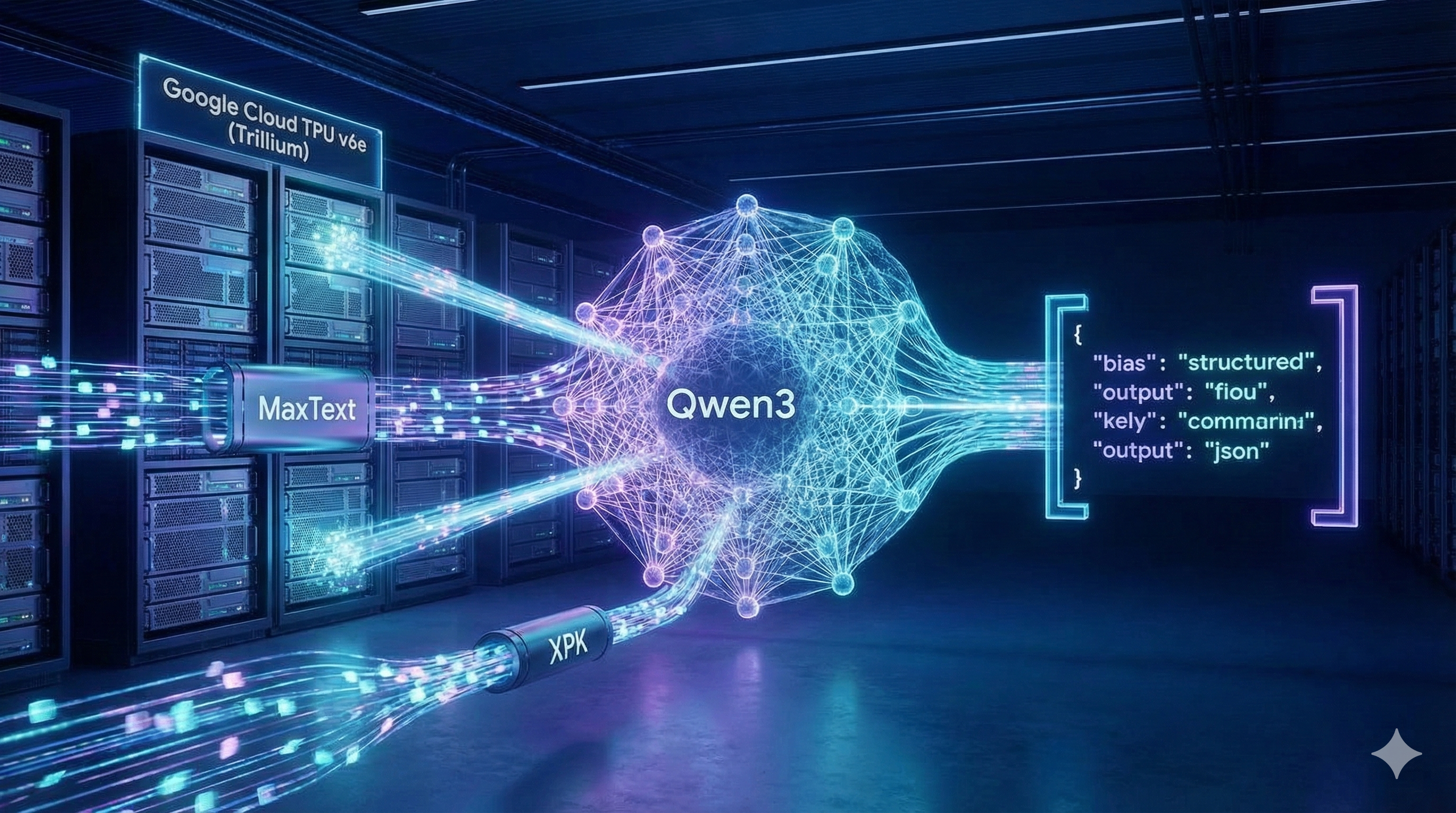
An end-to-end guide to orchestrating Custom Qwen3 pre-training on Google Cloud's Trillium TPUs. I dive into modifying the Qwen3 architecture for structured JSON outputs, leveraging XPK for orchestration, and serving the final artifacts with vLLM's high-performance openXLA backend.

As hardware lead times and power constraints hit a ceiling, the competitive advantage in AI has shifted from chip volume to architectural efficiency. This article explores how JAX, Pallas, and Megakernels are redefining Model FLOPs Utilization (MFU) and providing the hardware-agnostic Universal Adapter needed to escape vendor lock-in.